Now this is a childrens literature book that is amazing! I loved it. It kept my interest and most importantly would keep the interest of children. I am hoping Madison will read it and love it too. I loved the 1960s prices of things. The way of life so differently only 50 years ago.
I think I related to Claudia. I am a planner, an organizer and an oldest child.As an oldest child you just don't escape those feeling of being used. You are the the constant, you are the most reliable, you are the oldest, you were always there first. She feels unappreciated and things that running away will make those in her family appreciate her more, love her more and miss what she contributes. I love that she brought her nine year old brother along for his money. He is so frugal and saves his allowance every week and never spends a cent. I found it hilarious that he earned most of his huge lot of about $25 gambling while playing war on the bus.
There were two parts of the book that stood out to me. One is when they are at Mrs. Frankweiler's house and Claudia tells Mrs. Frankweiler that you should learn one new thing every day.
Mrs. Frankweiler answers "NO, I don't agree with that. I think you should learn, of course, and some days you must learn a great deal. But you should also have days when you allow what is already in you to swell up inside of you until it touches everything. And you can feel it inside you. If you never take time out to let that happen, then you just accumulate facts, and they begin to rattle around inside of you. You can make noise with them, but never really feel anything with them. It's hollow."
I loved this idea. How many of us study, read, watch but don't allow any of that knowledge to "swell up inside of you". Do we have a bunch of facts that we have collected and they are just going to "rattle around inside of you." I really could apply this to gospel principles. When I read the scriptures and I doing it just to gain knowledge, learn the stories and the facts. Do I allow it to swell up inside of me so that it touches everything? Is it hollow? This gave a great deal to think about. That sometimes just pondering is the best way of increasing our knowledge.
The other part I found humorous was when they were bathing in the fountain and they found round discs stuck to their bottoms. When they realized it was money they had discovered their source of income. Too bad they didn't think of standing on a corner with a cardboard sign. That seems to work out well for some. They are so amazed that someone would throw a quarter in.
"Someone very rich must have tossed in the quarter, " Jamie said. "Someone very poor, " Claudia corrected, "Rich people have only penny wishes."
I had to think about what she meant by that. I pondered (so as to not just accumulate a rattling piece of information to make noise with). What I think Claudia meant, and this is from a child's perspective, and one that is collecting her income from a fountain, is that rich people are rich because they keep their quarter and only throw their pennies away. Or she could have been thinking that they have everything they want or need so they are just thinking of little penny wishes for fun to throw into the fountain. I don't really know what she was trying to say, but I still found it funny.
Monday, August 30, 2010

Friday, August 27, 2010
The Midwife's Apprentice by Karen Cushman
I have been picking up four or five of the shorter Newberry Books each time we go to the library. I can usually finish them in a day or two so that is how I am burning through so many books. This book was another interesting choice for a childrens' literature award. I found it very depressing. It is set back in medieval times so that is depressing in and of itself. It's about an orphaned girl who doesn't know where she came from and she doesn't even know her name. She has just been called Brat by the villagers she tries to scavenge from. She earns her new name, Beetle, because she is caught sleeping in a dung heap to keep warm... dung beetle.... Beetle. She likes that name better. She is treated horribly by adults and kids. She suffers from stones being thrown at her, name calling and shunning. She is constantly shunned and never un-shunned. She doesn't like stealing so she tries to find people to work for so she can earn an onion, some bread and maybe some cheese. I can't imagine gnawing on an onion, but I guess its better than starving. She finally happens upon a midwife that is a cranky single lady that just bosses her around. She has the job of boiling goose fat for soap making, finding all the herbs and nuts they need for poultices and ointments. She thinks she is too stupid to learn anything, and the miserableness just goes on and on. She starts watching the midwife and learning some of her tricks of the trade. She decides to name herself Alyce. She is successful at helping one lady deliver a baby whom the midwife had left assuming the baby would die and she would be back later to "get it out of her". This lady's sister requests Alyce, and only Alyce, to come help with her delivery. The midwife is furious and sends her on her own. Alyce is scared and can't help the woman. The midwife is summoned and the baby is born. Alyce fears for the punishments to come her way so she runs away. She comes to an inn and becomes the inn girl. She meets a lodger there who is writing a book of knowledge, kind of like an encyclopedia. She won't talk to him, she thinks she is too stupid. He finally speaks directly to her, asking her what she wants. She stews of this for the whole day and finally responds, "I know what I want. A full belly, a contented heart and a place in this world." This made me think about my wants. I wish they were that simple and maybe they should be. A full belly is something we are fortunate enough to not worry about. A contented heart and a place in this world. I need to be more content. We have so much, I shouldn't always be wishing for something else or more. Right now, I want a new kitchen sink and a new faucet. Mine works fine, its old, 1970s style, but it works. Why do I feel like I need a new one. A contented heart. I am going to ponder on that one and work on being content with what I have right now and enjoy it. I am fortunate enough to feel like I have a place in the world as a wife and a mother. I don't feel the need to be something else. I truly and honestly believe that being a wife and a mom is one of the greatest accomplishments one can hope for. I love that I have been blessed with the opportunity to be both. I take it very seriously and it is my number one priority.
Another quote that I liked was from a boy that she befriends. He used to be one that would torment her. One day he and his posse chased her up a tree. He fell in the stream and couldn't swim. In fact she said that no one could swim, you only went in water to wash up before a wedding once a year. YUCK! All his friends abandoned him, so she bravely saves him from drowning. He becomes her advocate and convinces his friends to find someone else to torment. One day as she is being down on herself (which was standard for her) she is telling him that she is so stupid that she doesn't know anything. He replies, very wisely, I thought, "Just because you don't know everything don't mean you know nothing." She then starts thinking of the things she does know and sees a different light. That is a great thought. Just goes along with being grateful for what you do have and not being consumed with what you don't. I always related this phrase to things, not to knowledge.
Overall, this book was terribly depressing, but it does have a good ending, but the good part is just so short. I found it interesting too, reading the author's note at the end. She has always been interested in history but found it boring to always learn of the kings and queens of the time. She began researching what life was like for everyday youth during medieval times. So, let me just say, I am glad I was saved for this day and age... medieval times... yucky!
Another quote that I liked was from a boy that she befriends. He used to be one that would torment her. One day he and his posse chased her up a tree. He fell in the stream and couldn't swim. In fact she said that no one could swim, you only went in water to wash up before a wedding once a year. YUCK! All his friends abandoned him, so she bravely saves him from drowning. He becomes her advocate and convinces his friends to find someone else to torment. One day as she is being down on herself (which was standard for her) she is telling him that she is so stupid that she doesn't know anything. He replies, very wisely, I thought, "Just because you don't know everything don't mean you know nothing." She then starts thinking of the things she does know and sees a different light. That is a great thought. Just goes along with being grateful for what you do have and not being consumed with what you don't. I always related this phrase to things, not to knowledge.
Overall, this book was terribly depressing, but it does have a good ending, but the good part is just so short. I found it interesting too, reading the author's note at the end. She has always been interested in history but found it boring to always learn of the kings and queens of the time. She began researching what life was like for everyday youth during medieval times. So, let me just say, I am glad I was saved for this day and age... medieval times... yucky!
The Cat who went to Heaven, by Elizabeth Coatsworth
This book was another interestingly weird book. It was written in 1930 about a Japanese artist. He is very poor and has a housekeeper who tries to get as much food as she can every day to keep them from starving. One day she comes home without food and with a cat in her basket. He is angry at first and then comes to enjoy the company of the cat.
The priest of the temple comes to him to ask him to paint a picture of the death of Buddha. The artist spends days imagining the animals who came to visit the dying Buddha to get his blessing. Apparently, the cat never accepted the teachings of Buddha so it is said that a cat cannot enter heaven and they are evil and of the devil. Now, there is a Buddhist teaching I can go along with. Sorry, to any cat lovers, but I do not enjoy cats at all. So, the cat watches him paint all the animals, but not a cat. The cat seems to be expressing concern about this. The artist seems to sense thoughts from the cat. The very last day, he thinks he is done, and the cat is so sad. The artist decides to paint the cat in the picture knowing that he would not receive his fortune if the temple did not accept his painting. After he painted the cat the cat, named Good Fortune, falls over dead "too happy to live another minute."
This painting was going to change his life. They had offered him a relatively large sum of money. They gave him an advance and they bought some clothes and they ate three regular meals. So, he paints the cat anyway and expects them to burn the painting. The priest tells him that he must burn it and another painting will have to hang in the temple. The housekeeper cries because she thinks it is all her fault since she brought the cat home. The artist does not regret what he has done because he sensed the joy it brought to the cat. The next day he is awakened by shouts of a miracle occurring. He visits the temple and his picture is hanging there. But miraculously it had changed. Where he had painted the cat, the last animal in line to visit Buddha, it was pure white silk. Buddha, whom he had painted lying down, now had an arm reaching out. It was reaching for the cat which was near him bowing in "happy adoration".
The story was nice, he made a sacrifice to make someone else happy, no matter the monetary consequence. I really think this was just a cat lover who didn't agree with the Buddhist teaching that cats can't go to heaven, so she decided to rewrite Buddhist theology.
The priest of the temple comes to him to ask him to paint a picture of the death of Buddha. The artist spends days imagining the animals who came to visit the dying Buddha to get his blessing. Apparently, the cat never accepted the teachings of Buddha so it is said that a cat cannot enter heaven and they are evil and of the devil. Now, there is a Buddhist teaching I can go along with. Sorry, to any cat lovers, but I do not enjoy cats at all. So, the cat watches him paint all the animals, but not a cat. The cat seems to be expressing concern about this. The artist seems to sense thoughts from the cat. The very last day, he thinks he is done, and the cat is so sad. The artist decides to paint the cat in the picture knowing that he would not receive his fortune if the temple did not accept his painting. After he painted the cat the cat, named Good Fortune, falls over dead "too happy to live another minute."
This painting was going to change his life. They had offered him a relatively large sum of money. They gave him an advance and they bought some clothes and they ate three regular meals. So, he paints the cat anyway and expects them to burn the painting. The priest tells him that he must burn it and another painting will have to hang in the temple. The housekeeper cries because she thinks it is all her fault since she brought the cat home. The artist does not regret what he has done because he sensed the joy it brought to the cat. The next day he is awakened by shouts of a miracle occurring. He visits the temple and his picture is hanging there. But miraculously it had changed. Where he had painted the cat, the last animal in line to visit Buddha, it was pure white silk. Buddha, whom he had painted lying down, now had an arm reaching out. It was reaching for the cat which was near him bowing in "happy adoration".
The story was nice, he made a sacrifice to make someone else happy, no matter the monetary consequence. I really think this was just a cat lover who didn't agree with the Buddhist teaching that cats can't go to heaven, so she decided to rewrite Buddhist theology.
Saturday, August 21, 2010
"Thimble Summer" by Elizabeth Enright
This book describes an old fashioned summer of a little girl. Written in 1938, set on a farm, there is a feel of a much simpler lift. Waking early to do chores, taking care of the cows and pigs, canning the fruits and veggies from their garden, swimming in the swimming hole, sweating from the heat, waiting for the rain to water their crops. She goes through the usual struggles of a ten year year old girls. She feels bored, she feels neglected by her family and she finds some great adventures. One of my favorite adventures was when Garnet and her friend Citronella find themselves locked in the library after hours. They rode in the back of their neighbors pick up into town, without telling anyone where they were going. They went to the library found a book, curled up and started reading. Time passed quickly and soon they found themselves in the library alone and all the doors and windows locked and there was no way out. The pounded on the doors and windows to no avail. They heard the town clock chiming past midnight. They fell asleep and woke to pounding on the doors. It was their neighbor. Many people had been searching for them. One of the most telling signs that this is from a totally different era was that the children would go about their day, off to the swimming hole, hitch hike into town and not tell anyone where they were going. No life jackets, no seat belts, no helmets. This made me feel very uneasy as I read it through the eyes of a parent. The title, "Thimble Summer", comes from a pure silver thimble that Garnet finds in the bottom of the swimming hole. She finds it magical and thinks it must be worth a lot of money. She polishes it, and often keeps it in her pocket. At the end of the book, as she is reflecting on her summer, she realizes that "Everything has happened since I found it, and all nice things!" (pg 135) Her pig won the blue ribbon at the fair, their family built a new barn, they met and rescued an orphan boy that appeared out of the forest and he became a new member of their family, she was locked in the library, she went to the big city of New Conniston by herself.
I really enjoyed this book and I think I will recommend it to Maddy, it's a great read!
I really enjoyed this book and I think I will recommend it to Maddy, it's a great read!
Sunday, August 15, 2010
The Matchlock Gun
This book, by Walter D. Edmond, was written in 1941. It is very short... Cole read it in twenty minutes, it took me about 45 minutes to read it. In the foreword it talks about a lullaby that Gertrude VanAlstyne sings in the story. It says, "It is a real old Dutch song, and lots of mothers sang it to their children up and down the Hudson Valley and in and around Albany in 1757..."
The songs goes like this...
"Trip a trop a troenje (Up and down on a little throne; {mother's or father's knee}
De varken en de boenjen, (The pigs are in the beans)
De koejen en de klaver, (The cows are in the clover)
De paardje en de haver, (The colts are in the stable)
De kalfie en de langen gras, (The calf is in the long grass)
De eenjen en de vater-plas (The ducks are in the pond)
So groet myn klynen pappetje vas" (So big my little baby was)
Since Norm's mom is Dutch, I love it when I come across anything Dutch. Even though, by blood, I am not Dutch, my children and my husband are so I feel, in a strange way, a connection to all things Dutch... except for pickled herring.. I am not connecting to that in anyway shape or form.
This is another part in the foreward I found interesting/funny...
'It was not unusual to find Spanish guns in Holland, for the Spaniards had once invaded that country and believed they had conquered it. That is something no one should believe, for the Dutch are never good at staying beaten. In fast when you say, "Doesn't that beat the Dutch?" you mean, "Isn't that just about incredible.?"
I have never heard that saying but I am going to start using it... I always love finding anything Dutch and I love to share it with Hans. I emailed her all this last night when I read it.
So, the book is set in the mid to late 1700s around Albany area. A young family the Van Alstynes were real people. The husband was Teunis and the wife was Gergrude. Their children were Trudy and Edward. Teunis was in the militia to keep the Indians and the French from invading their territory. He left one evening and was gone over night. Edward was 10 and was left as the man of the house. They had a Spanish Gun above their fireplace. They way they describe it, is that it is "longer than a grown man" It was a huge gun and Edward wondered why his father never took it with him on his militia duties. That next day, a militia man rode his horse to their little farm house and said that the Indians had broken through their lines, Teunis was okay but he wanted them to go to his mother's house. She lived in a big brick house just a little up the road from them. Mrs. Van Alstyne was a little crusty. She didn't approve of Gertrude because she had no "Van" to her name. Gertrude felt more comfortable at her house and decided to stay there. She made a plan with Edward to guard their house. She took down the spanish gun, loaded it with two bullets, some nails and coins. She cut a hole in their window, propped the gun on the table and got a candle ready for Edward to discharge the gun on her signal. She knew she would not be able to see if the Indians were coming if she was in the house. She set Trudy up in her room with a doll and some lumps of sugar and told Edward to listen for her to call his name and he was to shoot the gun. She went outside on the pretense of picking beans so she wouldn't look suspicious. When she saw the brick house on fire, she noticed five or so Indians coming towards her house. She started running and they were chasing her. When she got to the stoop she yelled for Edward, she went down and was hit in the shoulder with a tomahawk. Edward discharged the gun and killed four of the Indians and the others ran off. Edward had Trudy take off her shirt and he stuffed it into his mother's gaping wound after he took the tomahawk out of her shoulder.
The bravery shown by the mother and the children, as well as the father is amazing. I think in today's times we have to be brave, but not at the risk of losing our lives like that. It is good to read things like this to put our lives into perspective. I can often make me think that we don't have it so bad. I don't have a mansion, but I do have carpet. I don't have a maid or a chef but I can just waltz into Costco and get my food and turn on my oven and cook something. I may not have a jetted tub but I do have indoor plumbing. It may be hard to make ends meet but I don't worry about my husband or my children getting attacked by Indians. Such different lives, such different perspectives... It's just good when you can get that in a 40 minute read.
Saturday, August 14, 2010
Number the Stars by Lois Lowry
We finally ventured to our new local Sandy Library. It is quite a big bigger than the West Jordan. I was perusing the shelves in the youth non fiction area and I came across four or five shelves that had ALL the Newberry Winner Books in one section! They had multiple copies of each book all right there. No more looking it up on the computer and trying to find one. I can just browse through them all in one spot. Ok, enough said... I chose three or four that were very short. I finished "Number the Stars" in two days. It is about a Danish Girl during WWII when Denmark is occupied by the Germans. She has Jewish friend named Ellen. Ellen's family must flee in the middle of the night so Ellen comes to stay with Annemarie. They talk about the Resistance in Denmark and how many people helped so many Jewish escape across the sea to Sweeden. At the end of the book the author explains a few neat facts that were actually true. The fisherman would smuggle the Jewish people in their fishing boats. The German Soldiers discovered this ploy and brought in German Shepherd dogs to sniff them out. There were Sweedish scientists that came up with a concoction they would soak handkerchiefs in and it would attract the dogs and then numb their noses so they couldn't find the human scent on the boats. I love that people of different backgrounds and religions were willing to sacrifice so much, even their lives and their families lives to help another that was being so unjustly treated. One of my favorite parts was at the end when the occupation was over and the Jewish were able to return to their homes and they came back to immaculate houses and apartments. Their friends and neighbors for over a year, had been dusting their furniture and polishing their silver for them while they were gone. Such acts of kindness when everyone had so little. No sugar, no butter, no milk... but the still found it in their hearts to give so much service. Why is it that those of us who are blessed with so much find it difficult to find the time to serve others as much as we should? This book has changed my perspective on being willing to help those in need.
Tuesday, July 27, 2010
More books, not Newberry, but GREAT ones
I discovered a new author from a recommendation from Shelley Buckley. Her name is Sandra Dallas and I have read two of her books. The first one, "Prayers for Sale", is a quaint story about a small mining town in Colorado in the 1930s. Hennie, 86, and Nit, 17, become best of friends. The women quilt, pick berries, make pies, prepare for a baby and help each other out so much. So much of daily life in that time was physical labor that the women banded together for support. They were so much closer and relied on each other so much. I truly enjoyed the mannerisms and some of the sayings that are used in the book. The title, "Prayers for Sale", is on a sign that hangs on the main characters fence post. She doesn't go to church but feels so blessed in her life that she doesn't need to offer many prayers for herself but will "sell" her prayers and offer them up for others. She makes a point that most of us are truly blessed every day and there are often so many others that are in far worse circumstances that we can offer prayers for. It makes me think that we should offer an unselfish prayer every now and again. Prayer for everyone else and not yourself. You know, how you offer those gratitude prayers, and only offer thanks and don't ask for anything. Maybe trying to only think of others once and a while will put things in perspective for us.

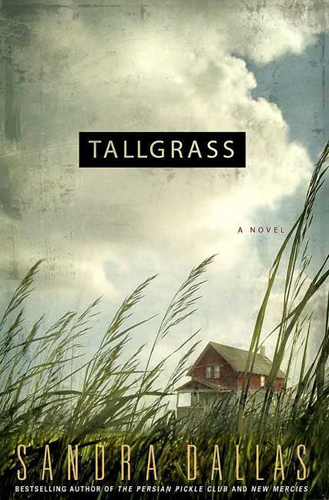
The second book of hers that I read was called "Tall Grass"
It also, was set in a small town in Colorado during World War II. They established a Japanese Internment Camp in this town and it displayed how they all interacted with each other. The main characters were beet farmers and they had a son go off to war and a daughter at home. It again, was mostly about their daily life, the way of life during the 1940s. There was a little murder mystery invovlved also. I really enjoyed learning more about life during the war and how it affected those living here in the States.
Sunday, April 11, 2010
"The Hunger Games"
The books in this series are not Newberry winners, but I LOVED them. I read the first two books in less than a week and now have to wait until August for the third and final book to come out. Cole read them before I did and thoroughly enjoyed them. When I started the first book, I had this eerie feeling that our America could end up like this... Panem. Not the Hunger Game part, but just the fact that society and commerce have failed and even though there is technology people are living back in pioneer-like circumstances. They have to grow their own food, hunt in secrecy, and obey all the crazy government rules. I loved that the book was something totally different. I loved the imagery of the clothing, and obsession oo physical appearance that the residents of the Capital had. There was so much suffering and poverty in all the districts yet the people living in the Capital had all the luxuries they could ever ask for. I loved the suspense of the games and the mystery of the love triangle. I recommend this series for all who love a good suspense. I am anxiously awaiting the arrival of the third book in August.
Tuesday, March 30, 2010
The Westing Game
I just finished the Westing Game. It was good but not great and not one of my top favorites. I felt it was very confusing and hard to follow. There were so many characters and they were all intertwined and hard to keep track of. I like a good mystery, who-done-it, type. I did enjoy the mystery. My favorite character was probably Turtle. She is a super smart stock-savvy ten year old. She figures it all out and outwits, outlasts and outplays all the adults. Hey it's the original Survivor. Good, short read.
Tuesday, March 16, 2010
Up, Up and Away

Subscribe to:
Posts (Atom)